

DOG BEHAVIOR QUALIFICATIONS
Click through concern areas to read about our standards here at Wag Watch and our advice if this is an area of struggle for your dog.
Play Style & Energy
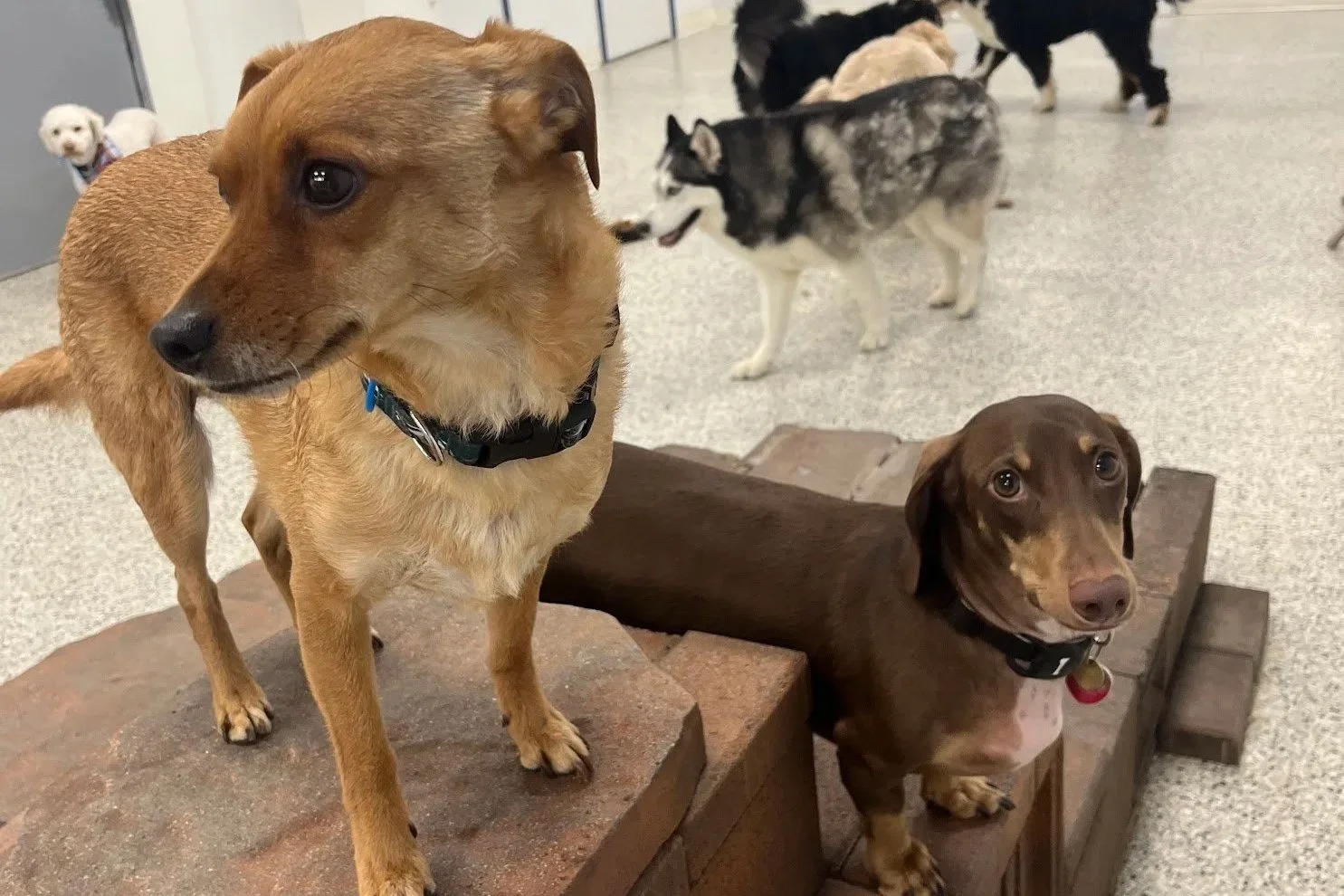
Dogs at Wag Watch often play all day long, so it’s critical they do so in safe manner. For higher energy dogs in particular, we focus on their responsiveness to commands to ensure that we can manage that energy in a way that allows us to prevent & avoid conflict.
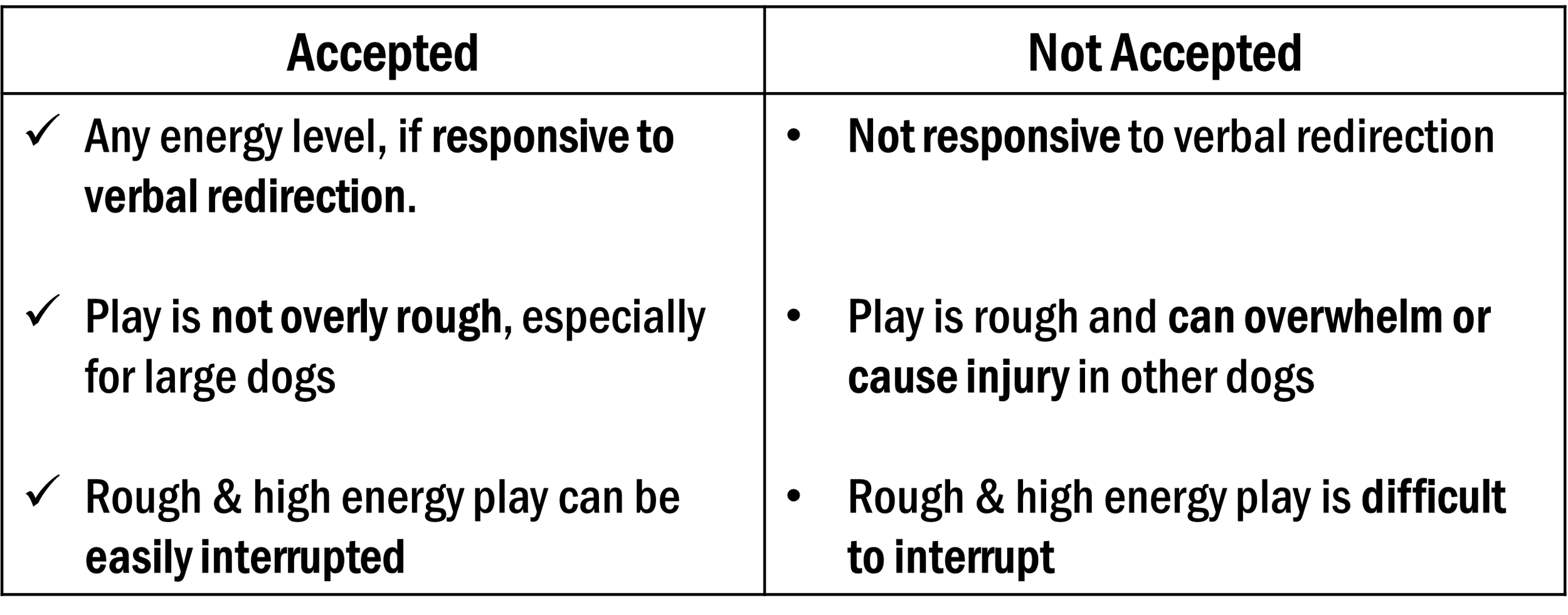
If your dog does not meet the above standard, we recommend the following steps before signing up for Wag Watch:
Learn More about Safe & Unsafe Play: Owners have a range of interpretations of what safe play entails. Check out our resources to help understand key indicators we look at: one vs. two-way play, fixation, and body language.
Practice Basic Commands & Recall: Most dogs know how to play, but many do not understand when we want them not to play. At the base level, you want your dog to respond to their name being called and a simple “Come” command. With the highest energy dogs, we also recommend developing a play-specific command ("Leave It”/ “Break”/ “All Done”), where you can more precisely communicate that the dog needs to take a break.
Stress-Test Commands: Many owners know that what works at home, may not work in the dog park. If your dog’s recall is strong in a dog park (or similarly stimulating setting), there is a greater likelihood we can manage them at daycare as well.
Engage a Professional: If you struggle to improve recall at home, certified trainers are a great option. We recommend hiring a professional who will work directly with you in cheaper sessions (usually ~$100-150 /hr) vs. extended, expensive “boot camps.” In direct sessions, you can build a toolkit to reinforce commands and behaviors at home, at dog parks, and eventually at daycare.
COMFORT WITH DOGS AND HUMANS
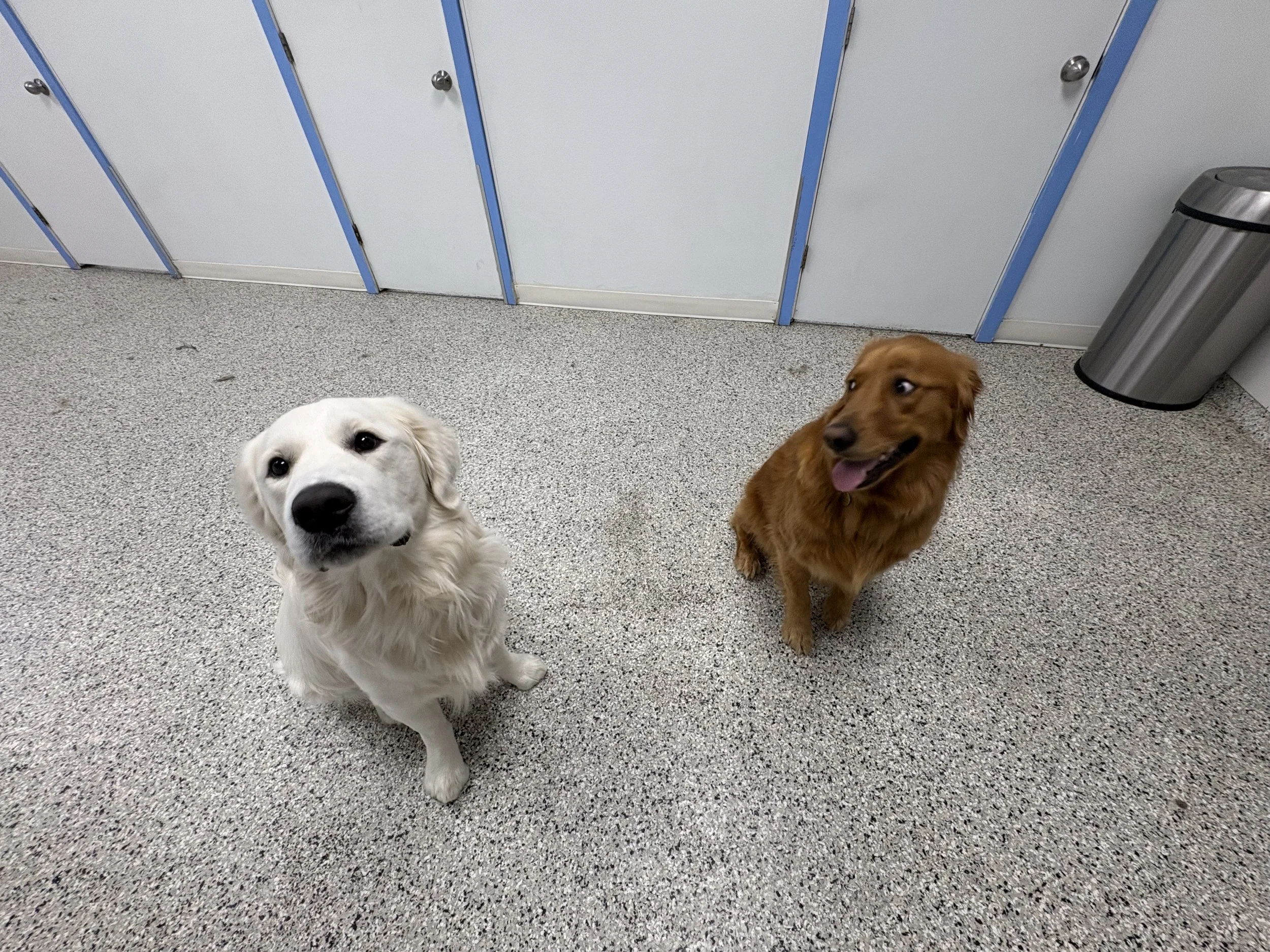
We do not accept dogs who exhibit aggression, even if its only in specific situations. No matter the size, breed, energy level, or age of other dogs your pup interacts with, we have to be 100% certain it will be safe. We establish 2-3 daily groupings to create as comfortable an environment as possible, but those groups change every day depending on which dogs sign up!
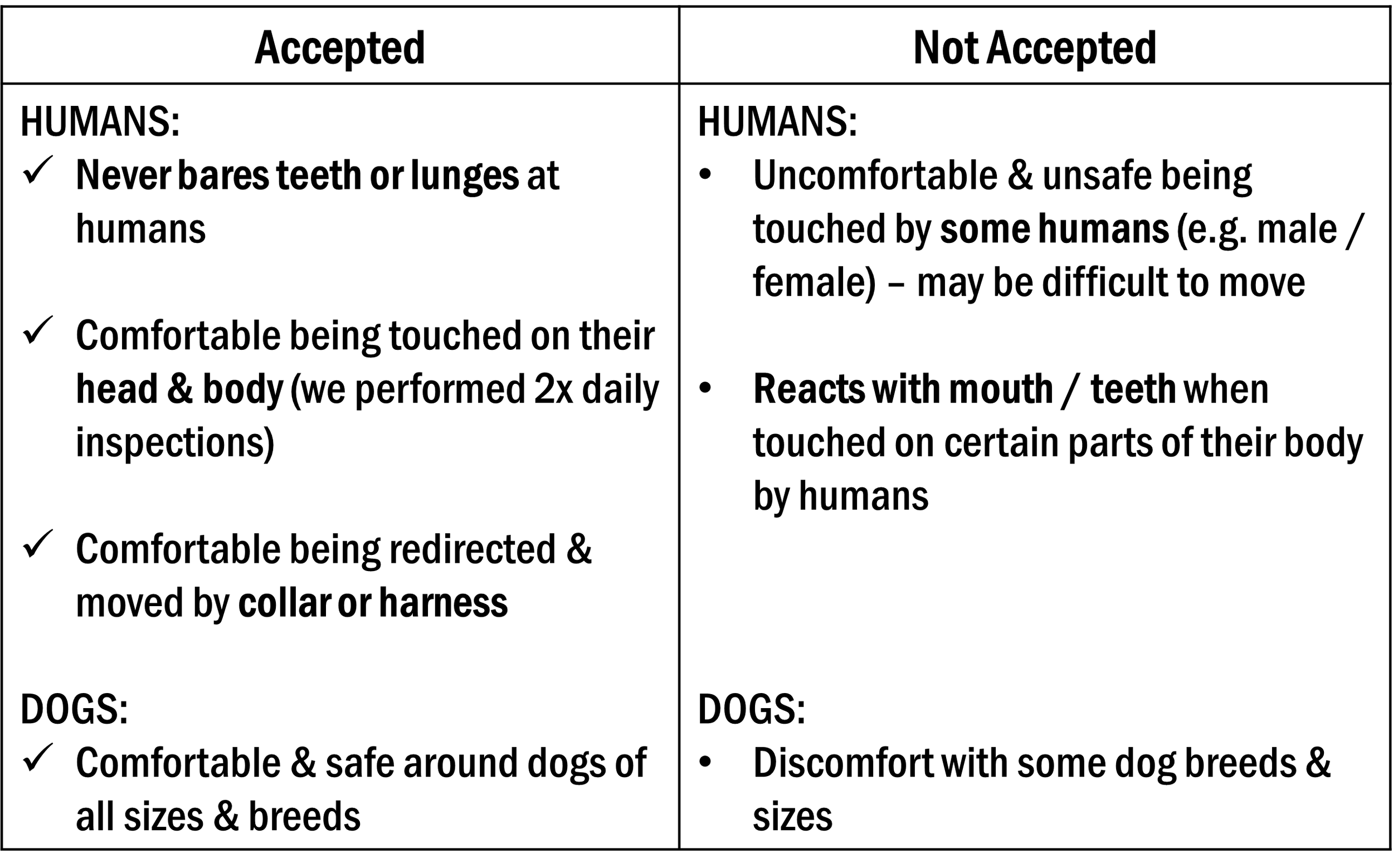
If your dog does not meet the above standard, we recommend the following steps before signing up for Wag Watch:
Engage a Professional Trainer: While many dog behaviors can be addressed with at-home training, displays of aggression (teeth baring, lunging, growling) usually reflect deeper stress or fear in a dog. Certified trainers are experts in diagnosing the root-cause of that underlying stress, and can help you determine the extent to which it can be addressed. They’ll give you an honest assessment of both what’s achievable and how to achieve it.
Test Training Results: Daycare is a hyper-stimulating environment, so we recommend taking an intermediate step before experimenting with daycare. If your dog was uncomfortable with some humans, test how they do with friends or family. If your dog was uncomfortable with certain dogs, have a playdate or see how they feel at the dog park (but ultimately do whatever your trainer recommends!).
BARKING
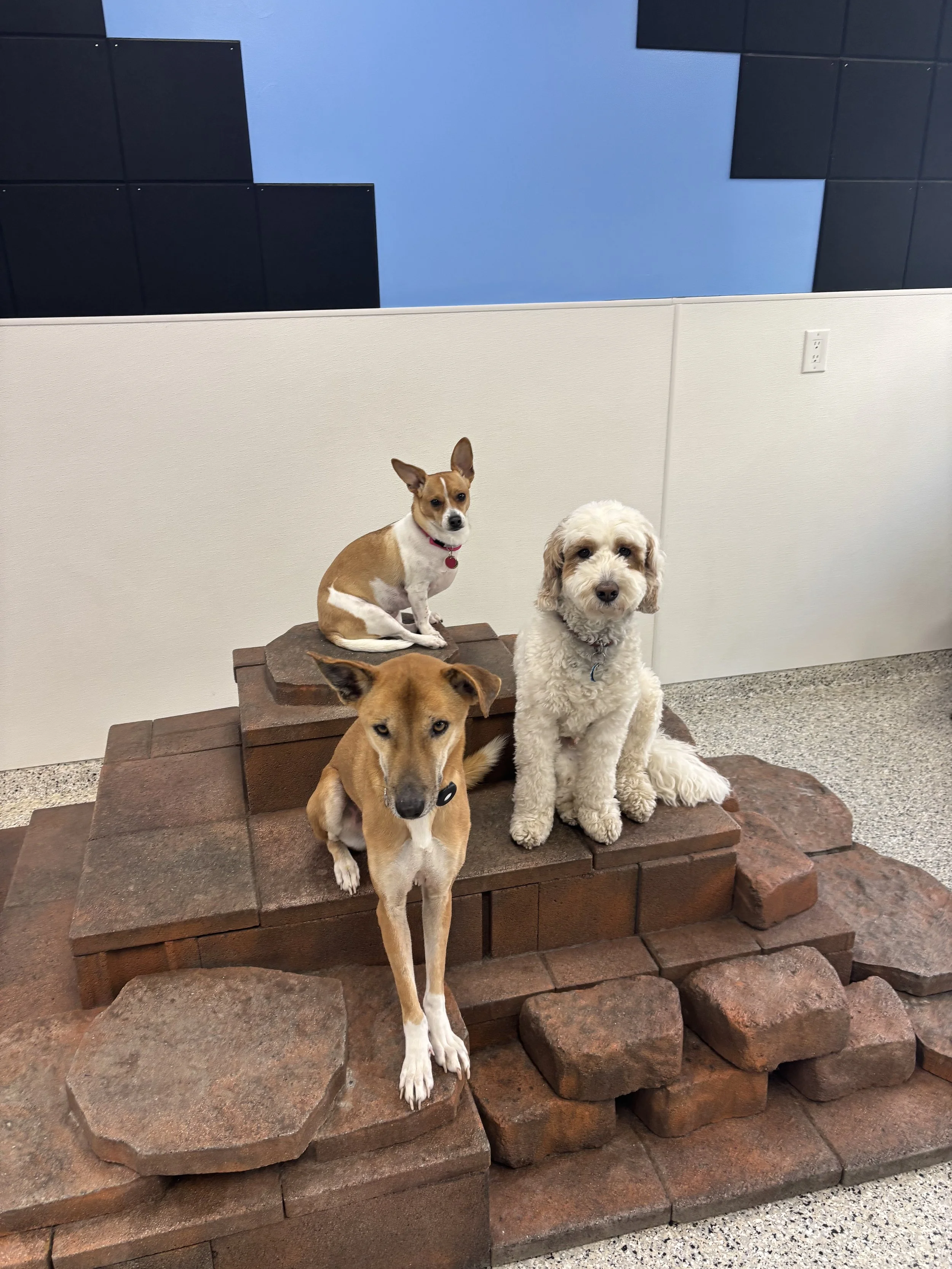
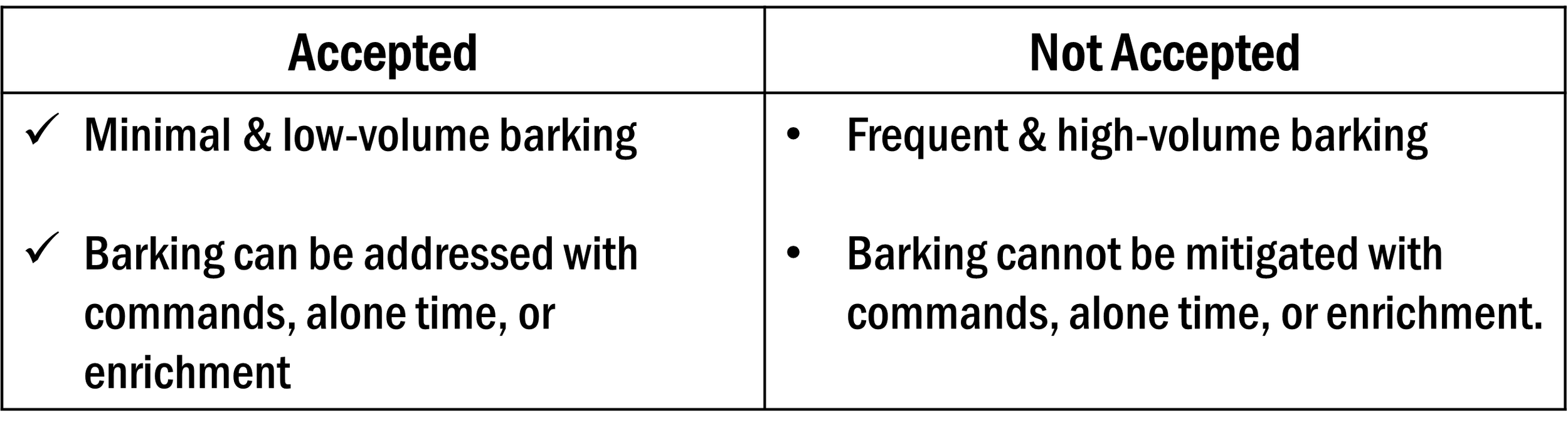
Barking is a very natural behavior in dogs (and is healthy in many cases!). In a daycare setting, though, it is a concern as we want to keep our ears, dogs, and neighbors happy!
Moreover, we find that barking can have a domino effect (barking leads to more barking). So when it does happen, we have to have tools to address and mitigate it immediately.
If your dog does not meet the above standard, we recommend the following steps before signing up for Wag Watch:
Identify Barking Type: Dogs bark for all kinds of reasons, but generally we divide them into 1) alert barkers, 2) anxiety barkers, and 3) demand barkers.
Leverage Online Resources: Once you figure out why your dog barks, you can use a host of internet resources to train your dog at home.
Engage a Vet or Trainer: If you don’t find success working on reducing your dog’s barking at home, you may consider engaging a vet or trainer. If your dog is an anxiety barker, a veterinarian may help determine if medication is appropriate. For alert & demand barkers, professional trainers can help better identify routines and strategies to deploy at home - and advise if they can be replicated at daycare.
OTHER HABITS AND BEHAVIORS
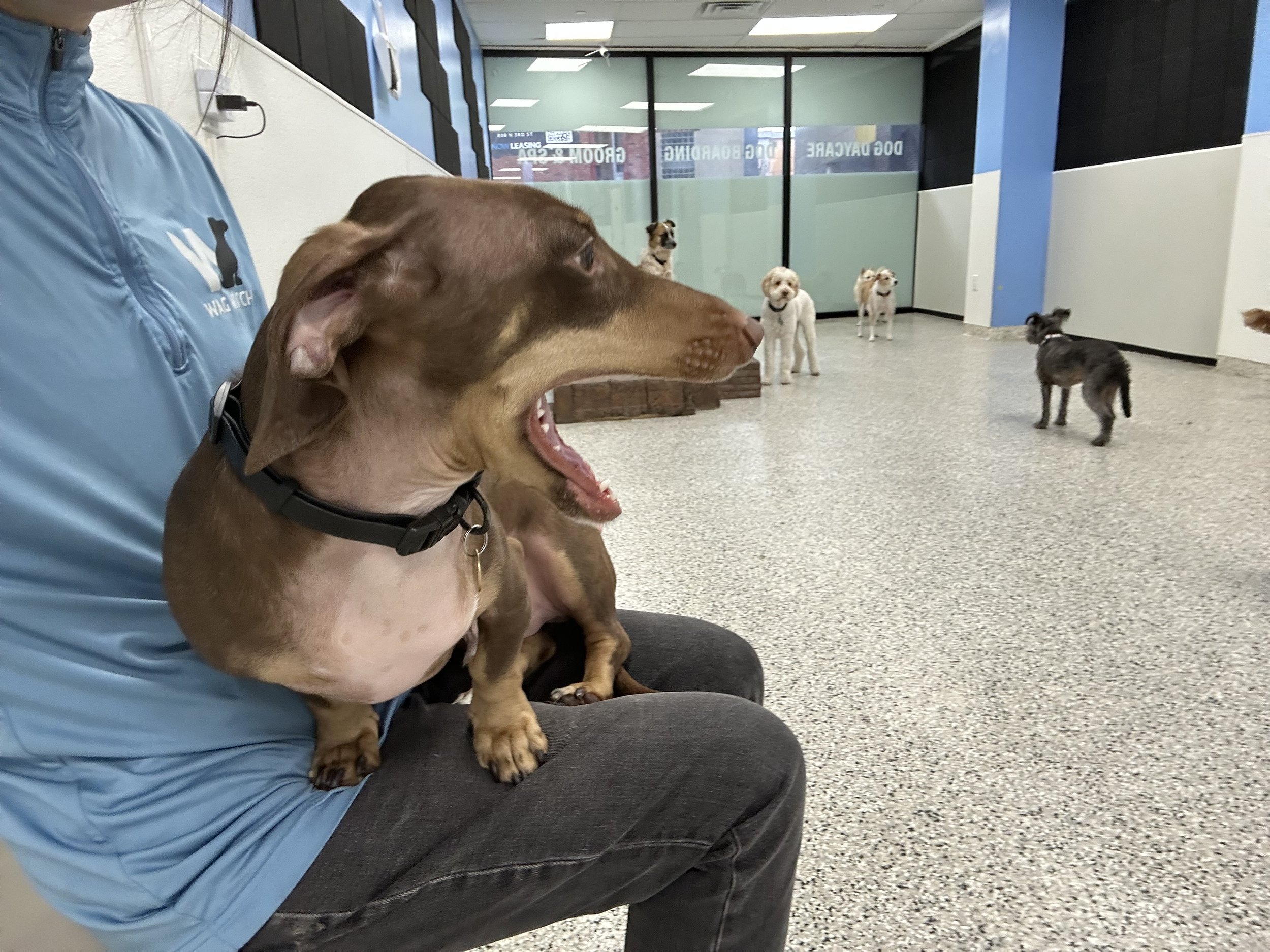
We have a saying at Wag Watch that “Dogs will be Dogs.” In other words, our staff is trained to implicitly understand that dogs are imperfect, and it is often these imperfections that make them so darn loveable.
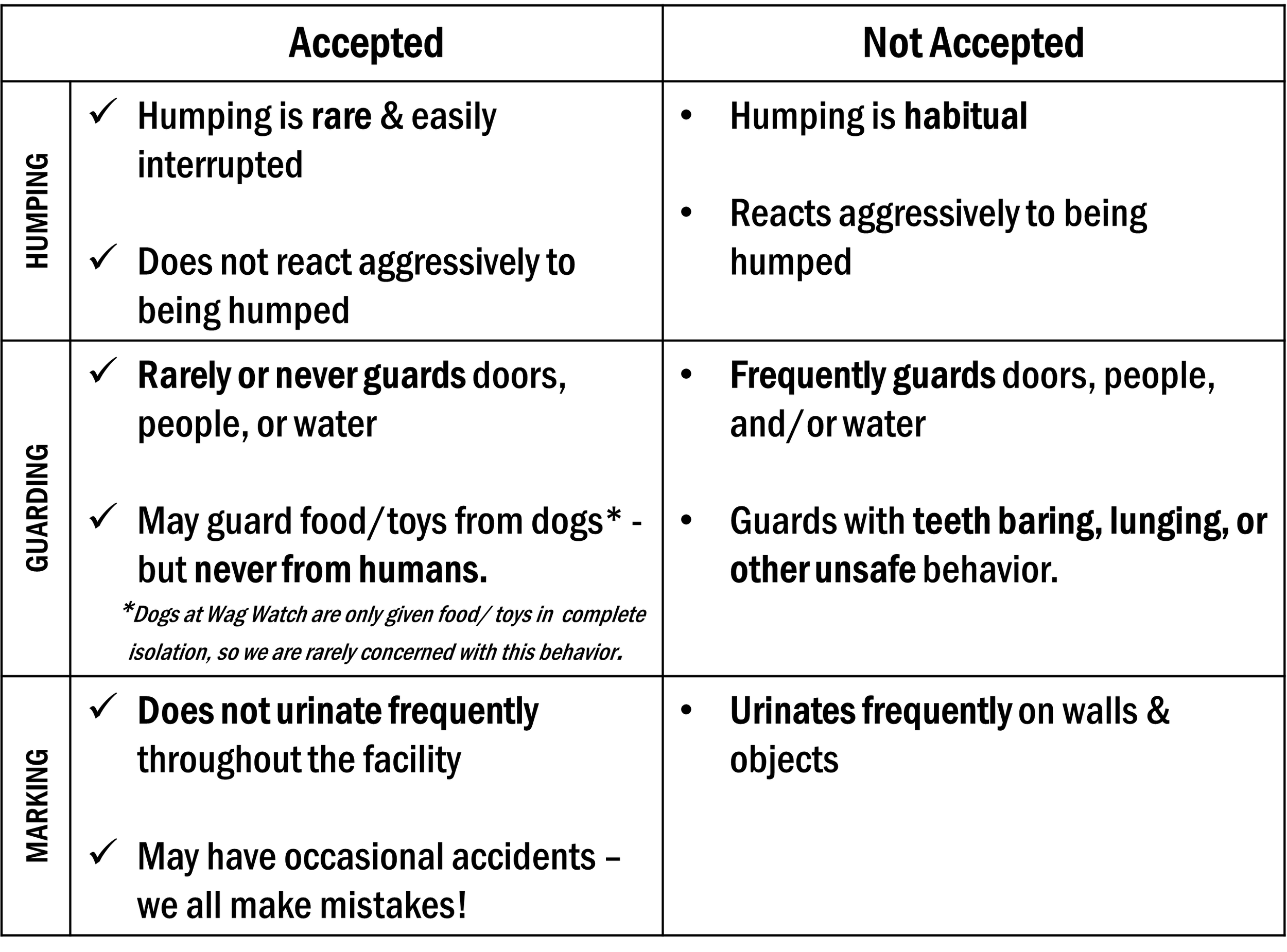
In some cases, though, dogs may develop habits that while not expressly unsafe - like humping - can lead to conflict and therefore need to be addressed before a dog can attend daycare.
If your dog does not meet the above standard, we recommend the following steps before signing up for Wag Watch:
Consider neutering/spaying your dog: We require that all dogs are neutered or spayed who are > 9 months old. Still, young dogs may not yet be altered, and therefore have a higher propensity of exhibiting humping, marking, and guarding behaviors. Altering your dog sometimes - but not always - improves these behaviors in the long-term.
Engage a professional trainer: With these behaviors, root causes can be difficult to identify. A quality trainer can help discern the underlying reason for your dog’s behavior, and also coach you on how to work with your dog on a daily basis to develop more permanent solutions.
Because we’re experts, we make the process very easy!
You’ll have some quick paperwork to fill out at the start of the process, including sharing vaccination and health information with us about your pet. You do not have to worry about keeping up with this documentation on your own…when you’re getting close to an expiration date, you’ll get an automated email from our platform. To ensure the safety of everyone, we conduct our work so that pets who are behind on vaccinations cannot schedule new reservations until their shots are updated.
As a Wag Watch dog daycare (or boarding) client, you’ll also have access to our luxury grooming services, which are not available to the wider public. Our grooming team can work with you to figure out exactly what your dog needs (or doesn’t need) and what their grooming schedule should be.
We send daily report cards home electronically, with photos and details about their visit, and when your dog connects with another dog, we’ll note them as a best friend for you. This means that you can start to get to know the other dogs in the neighborhood and learn about what types of dogs your dog loves best!